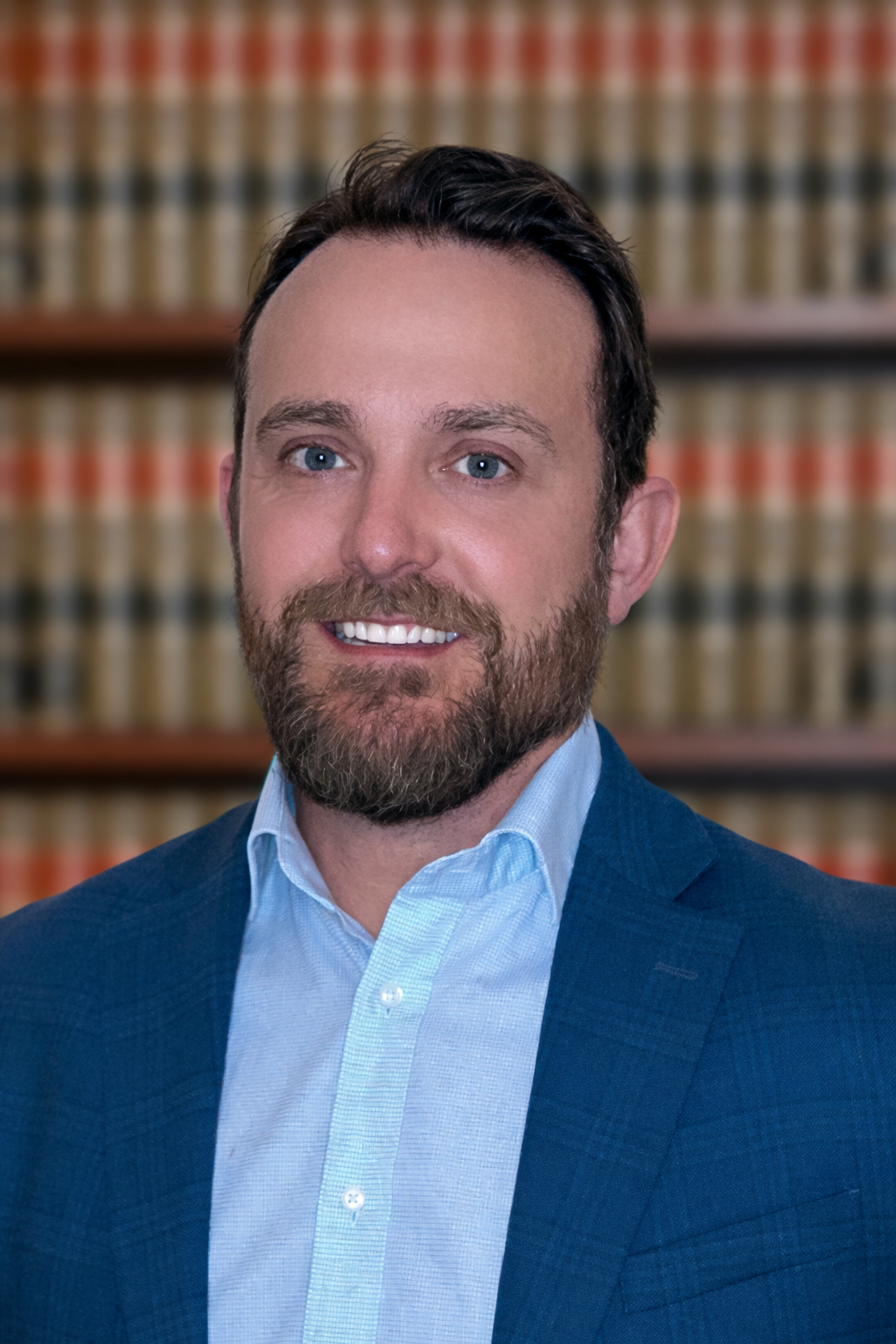
With a distinguished career rooted in public service, operational advising, and high-stakes problem-solving, Jake Childers brings an exceptional blend of discipline, judgment, and strategic insight to his legal practice. Before law school, he helped pay for college by serving as a wildland firefighter, an early experience that shaped his approach to risk, preparation, and responsibility. After moving to Oregon in 2013, he became active in the mountaineering community and served on mountain search-and-rescue teams, further reinforcing the value of calm judgment and contingency planning when conditions change quickly.
Following law school, Jake entered federal service with the U.S. Bureau of Land Management, where he worked on complex public land and natural resource matters, ranging from rights-of-way and land-use issues to logging, mining claims, and regulatory compliance. He advised on politically sensitive decisions affecting public resources and stakeholder interests, bringing precision, practical judgment, and clear communication to technical and often contested matters.
Jake later transitioned to the U.S. Agency for International Development, where he operated at the intersection of law, national security, and humanitarian action—helping leaders make defensible decisions in environments defined by uncertainty, urgency, and competing equities. Most notably, after serving as the Lead Humanitarian Assistance Advisor to the four-star commander at U.S. Central Command, Jake led and oversaw teams embedded across U.S. Central Command, U.S. European Command (EUCOM), and U.S. Africa Command (AFRICOM), providing senior-level counsel and on-the-ground coordination when stakes were highest.
He deployed as a lead advisor during the Afghanistan evacuation, the Libya floods, conflict response in Syria and Mogadishu, volcanic crises in Papua New Guinea, and efforts to support displaced populations in Iraq. In each setting, he advised U.S. diplomats, humanitarian organizations, and U.S. special operations forces in fast-moving, high-consequence environments—where the margin for error is thin and the cost of ambiguity is measured in lost time, lost access, and, at times, lost lives. That experience sharpened the discipline that defines his legal practice today: anticipate risk early, plan for worst-case scenarios, and execute with clarity when circumstances change fast.
Following the closure of USAID, Jake opened his own legal practice to bring the same discipline of contingency planning to individuals and families. Having witnessed firsthand the challenges that arise when a person dies or becomes incapacitated, particularly when plans are unclear or incomplete, he believes estate planning is not merely a set of documents, but a framework that protects loved ones, preserves intent, and reduces uncertainty at critical moments.
Jake is committed to long-term client service. For him, the documents are the byproduct of what is intended to be a lifelong professional relationship, one grounded in trust, clear counsel, and practical planning for whatever comes next.
Jake Childers
Attorney and Counselor